Updated September 2026 · 6 min read
Destination weddings in Barbados almost always run on transport. Guests are spread across hotels and villas, ceremonies are at beaches, chattel-house churches and clifftop venues, and everyone is in formal clothes in tropical heat. Here's how we plan the logistics so nobody arrives flustered.
Start from the ceremony time and work backwards
Fix the ceremony time first, then set the last guest arrival for 20 minutes before it, the bridal party for 5–10 minutes before, and the bride for the moment itself. From there, build pickup windows for each hotel.
Barbados traffic is light outside rush hours, but a coastal drive from the south coast to the west coast can still take 45 minutes on a busy afternoon. We add buffer time rather than hope.
Guest shuttles beat individual taxis
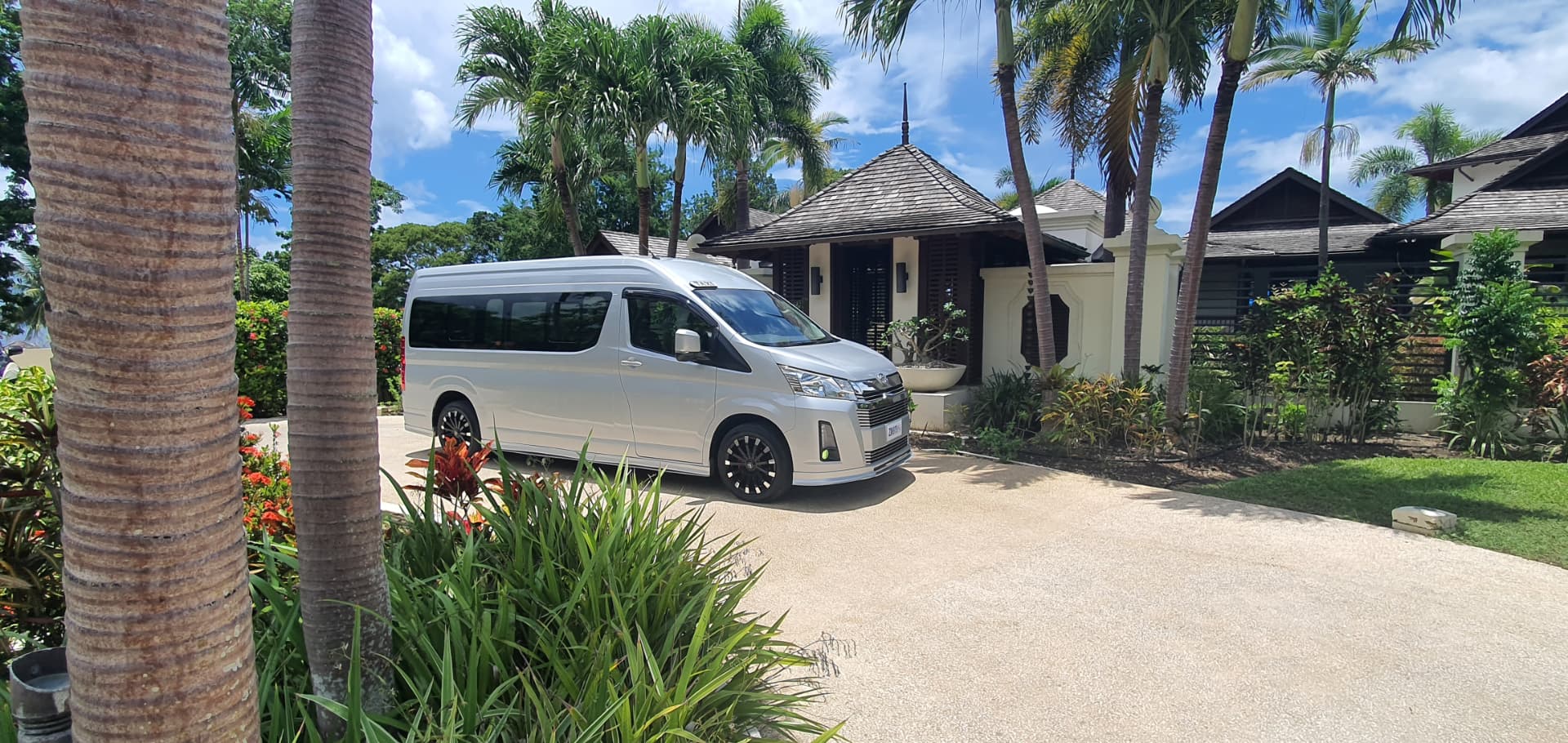
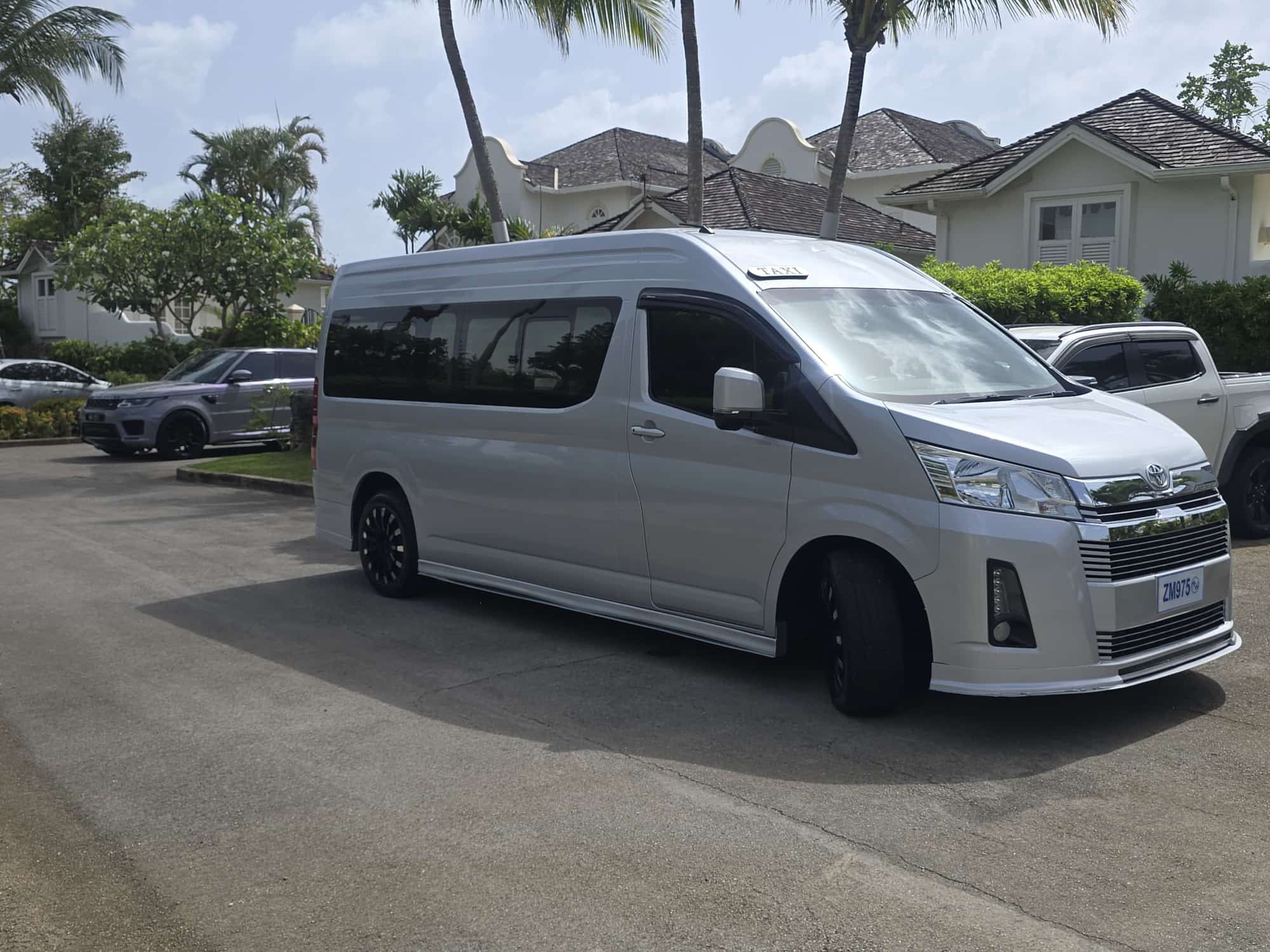
Grouping guests by hotel into shuttle runs in luxury vans is cheaper, calmer and far more punctual than fifteen separate taxis. It also removes drink-driving from the equation at the end of the night.
Plan a return run — and a second, later return. There is always a group that wants to leave after the cake and a group that closes the bar.
The dress, the heat and the vehicle
A full gown needs a vehicle with a wide door opening, room to sit without crushing the skirt and strong, quiet air conditioning. Our chauffeurs know how to help a bride in and out without a single crease, and vehicles arrive cooled in advance.
Keep water, tissues and a small emergency kit in the bridal vehicle. It costs nothing and it always gets used.
Photos, extras and the small courtesies
Build in 15–20 minutes for photographs on the way between ceremony and reception — a beach, a mahogany avenue, a plantation gate. Tell your driver in advance and it becomes part of the schedule rather than a delay.
Also plan for the elderly relative who needs a door-to-door run, the vendor who needs a lift, and the airport departures the next morning.
One point of contact on the day
Give your planner or best man a single WhatsApp thread with the chauffeur team. On the day, one contact controlling all vehicle movements is the difference between a schedule and a scramble.